Lunging, barking, hackles up, the lead going tight fifty yards before you’re anywhere near. You’ve started walking at six in the morning to avoid people. That isn’t a training problem you’ve failed at — it’s a distance problem nobody has shown you how to manage.
Free · In person in Norfolk or online · Nothing sold on the day
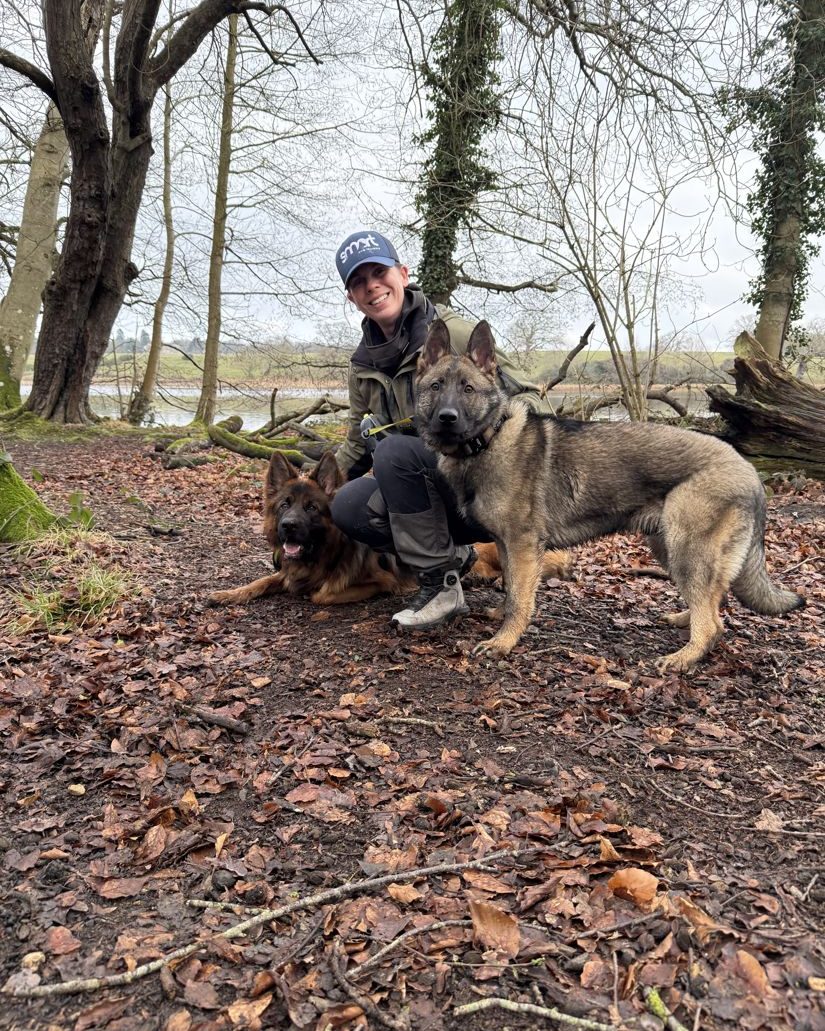
Owners describe this to us in almost identical words.
Three things are usually running at once, and only one of them is the dog.
The dog has repeatedly been put nearer to other dogs than it can cope with. Every time that happens it learns the same lesson — barking makes them go away. It works, so it gets stronger.
Tension travels down a lead. A dog that feels you brace before it’s even seen anything learns that other dogs are worth bracing for.
“Don’t react” isn’t a behaviour a dog can perform. Until there’s something else to do instead, there’s nothing to fall back on when it matters.
Most reactive dogs never get worked at a distance they can cope with, because no public place offers one. Two private acres does.
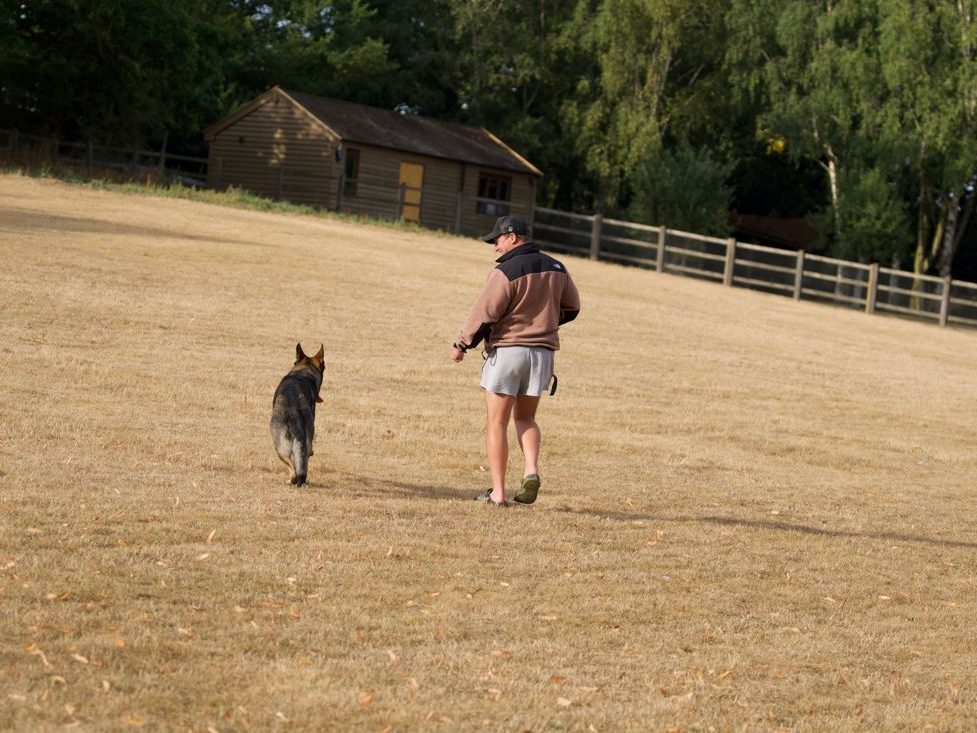
The paddock at Church Cottage — one dog working, nothing uninvited, distance on our termsThe order matters more than the technique. Most reactivity work fails because it starts too close, and nobody wants to say so.
Not where you’d like it to be — where it actually is. We watch your dog near another dog and mark the point where it stops being able to take food, hear you, or look away. Everything gets built from that number.
Right now another dog predicts tension. We work at your distance until it predicts something better — and we don’t move closer just to make it feel like it’s going faster.
A trained, rehearsed thing to do when it sees a dog, so there’s an alternative available under pressure rather than an instruction not to do the other thing.
A metre at a time, on our terms, with a dog we control on the other end. That’s what two private acres are for. If the week goes badly we go back out again, and that isn’t a failure.
A car park, a lane, a group session with other clients’ dogs. It doesn’t count until it works somewhere you didn’t choose.
One behaviour, not long rehearsed, and the rest of life is fine. Six to eight weeks on that one thing, with the outcome written down before we start.
Years of practice, more than one trigger, or a dog that has already had a go at something. Ten to twelve weeks, with support between sessions and residential as an option.
There’s no price on this page on purpose. What it costs depends on what we find, and we can’t find it from a form.
Free · No obligation · Norfolk and Suffolk, or online from anywhere